When your car breaks down, the last thing you want is the hassle of towing it to a repair shop. This is where a mobile mechanic comes in. They bring the workshop to your location, whether you are at home, at work, or stuck on the roadside. Equipped with a range of portable tools, a mechanic can handle everything from a flat tire to advanced engine diagnostics on the spot.
Knowing the essential tools a mechanic uses can help car owners understand the work involved and the importance of having the right equipment. It also gives aspiring mechanics a clear idea of what they need to start their own mobile repair service.
What are Mobile Mechanic Tools and How They Work
A professional mechanic performs vehicle repairs service and maintenance at the customer’s location instead of a workshop. This can be at home, at work, or even on the roadside. The convenience of a mechanic means customers save time and avoid towing costs.
These tools are portable, durable, and designed for on-site repairs. These tools allow technicians to diagnose problems, replace parts, and carry out routine maintenance without needing a fixed garage. Whether you search for a mechanic near me for a flat tire, battery replacement, or engine check, these tools make it possible for the mechanic to complete the job efficiently.
10 Mobile Mechanic Tools Used by Automotive Repair Technicians
1. Complete Basic Mechanic Tool Set
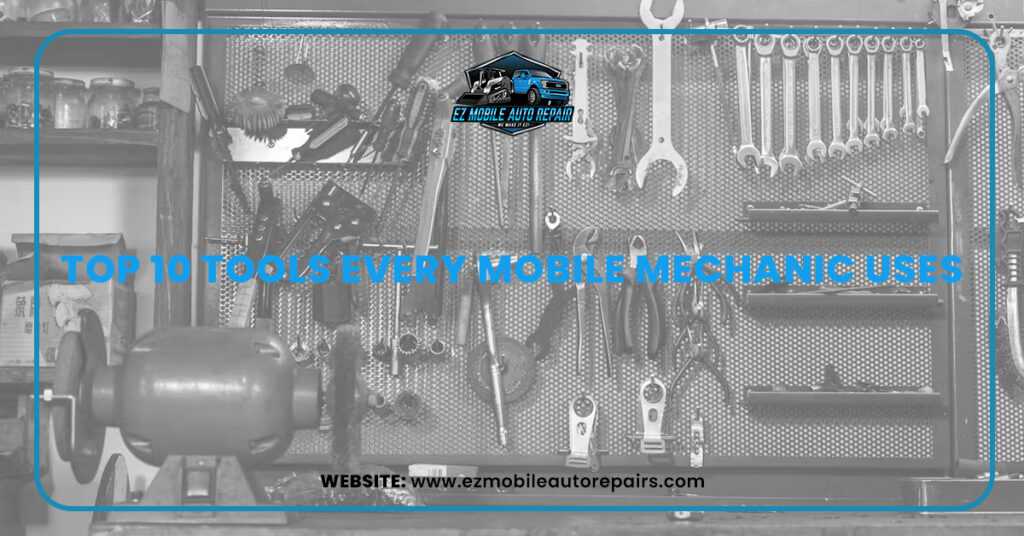
Every mechanic relies on a solid set of basic tools. This includes wrenches, sockets, screwdrivers, and pliers. A high-quality mechanic tool set ensures the technician can handle most common repairs. These tools are stored in portable cases for easy transport from job to job.
2. Portable Car Jack and Jack Stands
Lifting a car safely is essential for tire changes, brake inspections, and suspension repairs. A portable car jack, paired with sturdy jack stands, allows a mechanic to work underneath the vehicle without risk. Compact hydraulic jacks are preferred for quick setup and mobility.
3. Cordless Impact Wrench
This powerful tool makes removing and tightening bolts fast and effortless. Since it runs on battery power, a cordless impact wrench is perfect for mechanics who need speed and flexibility. It is especially useful for wheel changes and suspension work.
4. Diagnostic Scan Tool (OBD-II Scanner)
Modern vehicles have complex electronic systems. A diagnostic scan tool (OBD-II Scanner) helps a mobile mechanic quickly read error codes, identify faults, and reset warning lights. This tool is essential for accurate repairs and saves time by pinpointing problems immediately.
5. Battery Jump Starter
A portable battery jump starter is a must-have for emergencies. It allows a mechanic to start a dead battery without another vehicle. Many modern jump starters are compact, lightweight, and come with additional features like USB charging ports.
6. Portable Air Compressor
Flat tires can happen anywhere, and a portable air compressor ensures the mechanic can inflate them on the spot. Some compressors also power pneumatic tools, making them versatile for different repairs.
7. Oil Drain Pan and Fluid Pump
Changing engine oil or other fluids requires proper handling. An oil drain pan prevents spills, while a fluid pump makes it easy to extract and refill fluids efficiently. These tools help maintain cleanliness and save time during service.
8. Multimeter
Electrical issues are common in vehicles, and a multimeter allows the mechanic to test battery voltage, check alternator output, and inspect wiring connections. It is a vital tool for diagnosing electrical faults.
9. Mechanic’s Creeper or Mat
Working underneath a vehicle can be uncomfortable without the right support. A mechanic’s creeper or padded mat provides comfort and mobility, allowing the technician to slide in and out easily while staying clean.
10. LED Work Light
Good lighting is essential for spotting problems, especially in dim or nighttime conditions. LED work lights are bright, energy-efficient, and rechargeable, making them ideal for mechanics.
Maintaining Your Mechanic Tools
Taking care of tools ensures they remain reliable for years. Mechanics should clean tools after each job, store them in organized cases, and check regularly for wear or damage. Lubricating moving parts and keeping batteries charged for cordless tools also extends their life. Proper maintenance means a mechanic can work efficiently and safely at every job.
Conclusion
The right tools make all the difference for a mobile mechanic. From basic wrenches to advanced diagnostic devices, each tool plays a role in delivering quick, effective repairs. Whether you are searching for a mobile mechanic near me or starting your own mobile repair service, investing in quality tools ensures better performance and customer satisfaction.